
Instruments in Alleghany County Deed Records
The Alleghany Circuit Court Clerk serves as custodian of the county's land records. The land-record division accepts many instruments for filing. These include deeds, deeds of trust, releases, assignments, easements, plats, judgments, and other recordable documents. Each type does different work. A conveyance deed names the parties and the land being transferred. A deed of trust records a security interest, and a release documents its later discharge. An instrument's name alone rarely answers the legal question. So read the full document and any corrective filing that follows it.
| Deed Type | What It Does | Common Use |
|---|---|---|
| Conveyance deed | Records a grantor's transfer of a described interest | Trace the owner shown as grantee |
| Executor or fiduciary deed | Shows a transfer made under an estate or fiduciary role | Read with the probate file or order |
| Deed of trust | Records a security interest tied to land | Check later release or satisfaction |
| Release or assignment | Changes or discharges a recorded interest | Follow the later filing and parties |
| Plat or easement | Describes lots, access, roads or rights across land | Compare with the deed's legal description |
Not every recorded instrument changes ownership. A deed of trust secures a loan rather than conveying title. An assignment shifts the named interest holder without moving the parcel to a new owner. Match any release to the original instrument number or book and page. The index is only a pointer. What establishes the public chain of title is the recorded deed together with the instruments filed after it. So the recorded documents themselves deserve the close reading.
Search Alleghany Land Records Through Virginia SRA
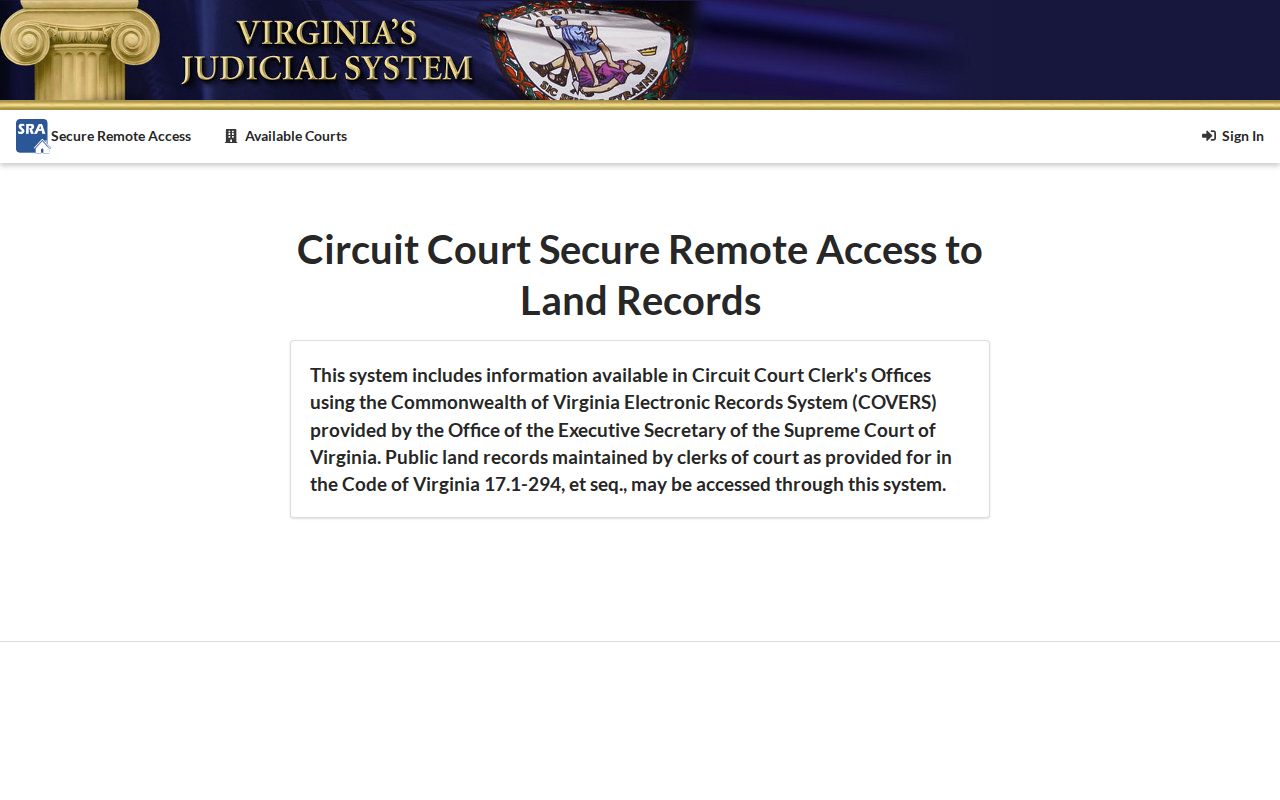
Virginia's Secure Remote Access system is known as SRA. It delivers circuit-court land records through its COVERS platform. Courts that enable it may offer free index-only access. Images go only to subscribers the individual Clerk authorizes. That access requires a signed agreement plus applicable fees. The Available Courts tab shows which courts offer which services. Alleghany County property records are part of that system. The online index start year and local copy charges are best confirmed with the Clerk directly.
The search interface may not display every query field at once. Look for controls covering party role, grantor or grantee name, instrument number, book and page, document type, and recording date. Parcel ID and full-text legal description searching may not be available. Confirm on screen before assuming otherwise. If an image is not accessible, save the exact instrument reference for a courthouse request.
The SRA land-record page explains access terms and court availability. Open the official SRA service rather than relying on a third-party index.
Ask the Clerk whether a particular book, image, or certified copy can be sent remotely, and what terms apply to that request.
Alleghany Deed-Index Fields to Capture
Treat a land-record result as a structured reference worth capturing in full. Copy down every field on screen before turning to another source. The useful inspection list includes party names, instrument type, recording date, book and page, and legal description. Not every field appears in every Alleghany County search result. Where a value is missing, ask the Clerk instead of substituting a guess.
| Reference | Why to keep it | Verification step |
|---|---|---|
| Grantor / grantee | Shows the parties and their roles in the index entry | Search both roles when tracing the chain |
| Instrument or document number | Identifies one recorded filing | Give it to the Clerk when requesting the image |
| Book and page | Connects to older bound volumes and prior deed references | Read the volume entry or courthouse copy |
| Type and recording date | Distinguishes a conveyance from a lien or release and dates filing | Compare with any later instrument |
| Legal description / parcel link | Connects the filing to the land rather than only the party | Compare with the assessment card or plat |
A consideration or transfer-tax figure may appear on an instrument. The display varies. Do not present a number as a confirmed sale price until the recorded page supports it.
Follow the Alleghany Grantor and Grantee Names
Start with the deed where the current tax-roll owner appears as grantee. Read the prior owner named as grantor. Then search that party as a grantee to find the earlier acquisition. Keep going. Note each deed's recording date, legal description, and instrument reference along the way. Building a chain of title is backward work, not a one-click report. Search alternate initials and entity names. Verify that every successive instrument covers the same parcel.
- Find the newest deed that names the current roll owner as grantee.
- Record the grantor, legal description, recording date and book/page or instrument number.
- Search the grantor as a grantee to locate the deed by which that party acquired the land.
- Repeat, checking each description for splits, combinations, easements or changed lot wording.
- When online results stop, ask the Clerk about older books, indexes and microfilm.
- Grantor
- The party conveying an interest in the instrument.
- Grantee
- The party receiving an interest in the instrument.
- Chain of title
- The sequence of recorded transfers connected to the same land.
- Book/page or instrument number
- A reference to retrieve the recorded filing; preserve whichever the index provides.
Estate Transfers Can Interrupt a Name-Only Search
Land does not always pass by ordinary deed. An executor's deed, fiduciary deed, will-related order, partition, trust, or life estate can carry title instead. Searching only the name on the current assessment card may miss the party who actually held authority to convey. Search the decedent as both grantor and grantee. Then look for the executor or administrator in the probate file. The deed and its supporting court order explain whether the fiduciary could sell or distribute the land.
Virginia's death certificates belong to the state. A certificate proves death facts rather than ownership. Current records carry eligibility limits. Older death information becomes public after the statutory period. For a transfer, the will, probate order, or deed is the evidence that matters. Marriage and divorce certificates follow separate access rules. A divorce decree may order a conveyance without touching the land record until a deed is filed.
Ask the Circuit Clerk how to inspect the probate case. Ask whether any portion is sealed or restricted. Keep family-history leads apart from the instrument that actually moved the property.
Older Alleghany Deeds Reach Beyond the Online Index
Alleghany County dates to 1822. Many of its oldest deeds live outside any electronic index. The statewide SRA description confirms electronic access. It never promises that every book has been digitized. When an index search stalls, go analog. Ask the Clerk about deed books, grantor-grantee volumes, courthouse terminals and microfilm. The Library of Virginia catalog and the regional library may hold county record series. They may also hold finding aids that fill the gap. Reel numbers and FamilySearch coverage vary by series. Confirm them before you plan a trip.
Historic deeds often describe land by stream, road, railroad right-of-way, adjoining owner or community. They rarely use a street address. A 1908 C&O depot or the county's railroad-era industrial landscape can explain a place-name clue. Still, a historical map is context rather than proof. The legal description and recorded plat are what tie a chain of title to actual ground.
Search the Library of Virginia's archival resources by county and record series. Confirm custody and access rules before requesting any volume.
The Alleghany Historical Society can illuminate old railroad or mill references. It keeps no deeds, however, and is not a records custodian.
VA Deed Alert Is a Notice, Not a Title Review
Virginia's courts offer a free VA Deed Alert service. It emails a notification when a name match appears in land records. An alert is only a heads-up. It does not block a filing, validate one, or prove a deed is fraudulent. A matching name may simply belong to someone else. Inspect the actual instrument and the parcel description before drawing any conclusion.
For a real ownership concern, contact the Circuit Clerk and follow the official response route. An alert email is never proof of title. The statewide enrollment details vary by locality. Ask the Clerk whether the service covers the records you need before relying on it.
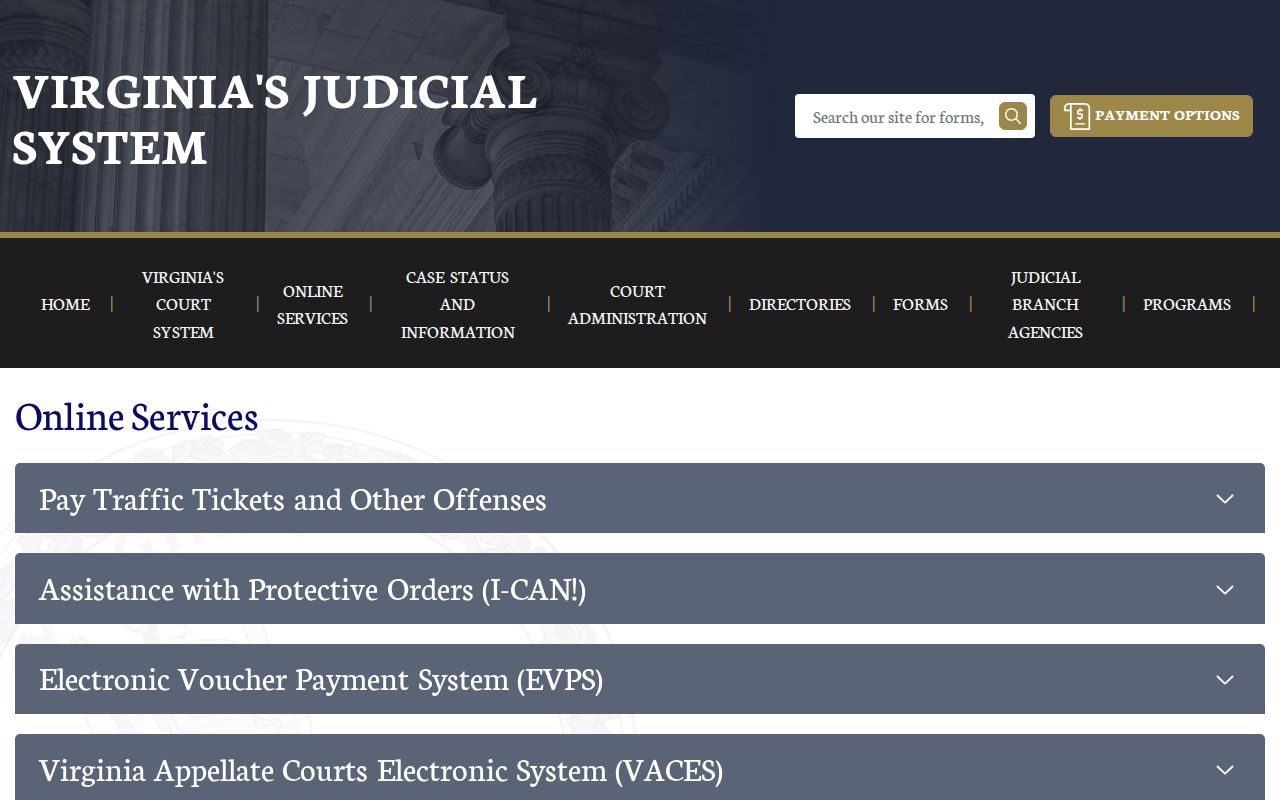
Review VA Deed Alert and the related court links before enrolling. The description of the court system's online land services lives there.
Note: A notice is a prompt to verify a filing, not proof of an unauthorized transfer.
Use Court Case Searches as Context, Not as a Deed Index
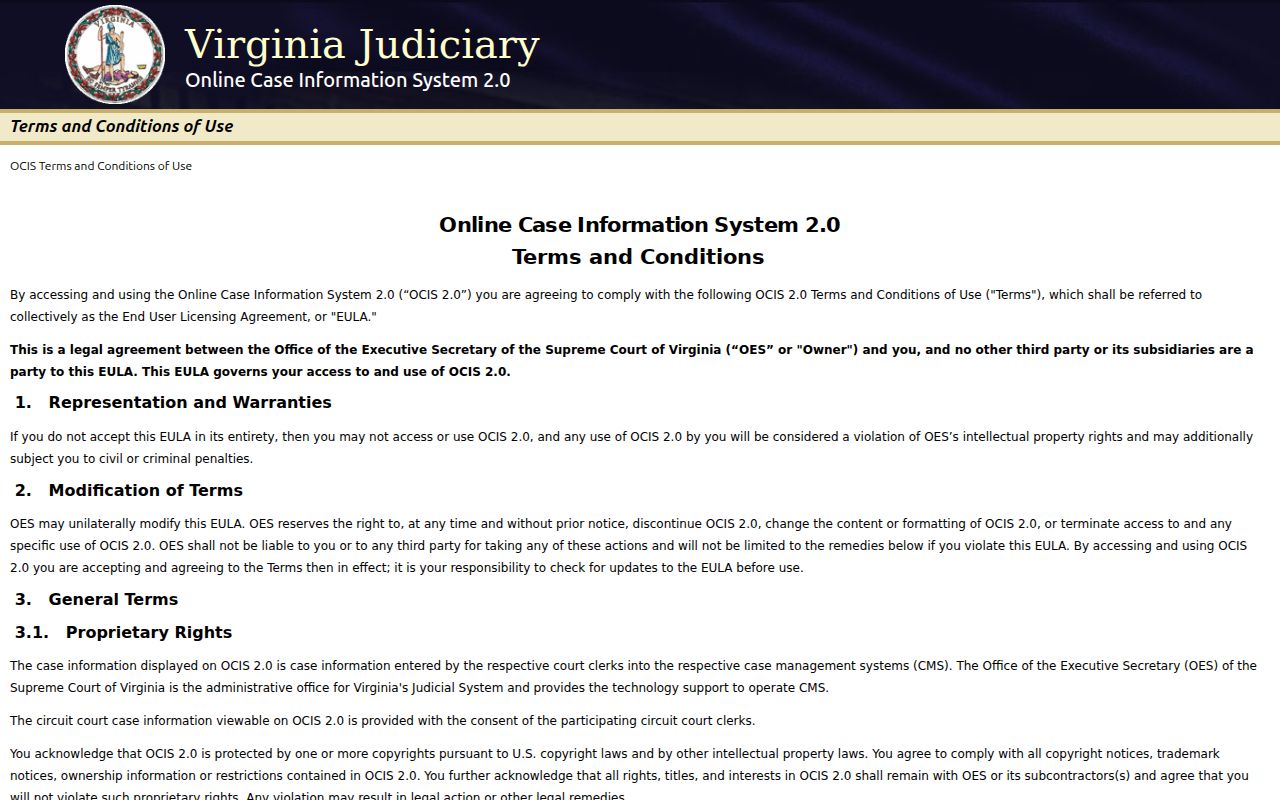
A civil or probate case can explain a transfer. It can also explain an estate administration or a boundary dispute. It is not the land-record chain. Case dockets and deed records answer different questions. Virginia's statewide case system is a separate public entry point. Review the Virginia Online Case Information System for the case types and courts it covers. A name match alone does not tie a case to a particular Alleghany parcel.
Use a docket to locate the proceeding, nothing more. Confirm any transfer in the recorded deed or probate instrument itself. Compare the legal description and recording reference before linking a case to a parcel.
Connect an Alleghany Deed to a Plat
A legal description can rely on lot and block, acreage, metes-and-bounds calls, or a road, stream or adjoining owner. A recorded plat may unlock the rest. Plats explain subdivision names, lot numbers, road dedications, easements and later revisions. Search the Clerk's land records for the referenced plat, then compare its boundaries with the deed language. County GIS may display a parcel drawn from the same source, but the digital polygon never controls over the recorded instrument.
Not every neighborhood label is a formal subdivision. A precinct name or area nickname should not be treated as one. Ask the Clerk for recorded plat references, and keep the parent parcel's book and page when a later split created a new identifier. In a boundary dispute, hire a licensed surveyor rather than scaling a screenshot.
The index locates the instrument. The plat explains the mapped lot. Professional title work evaluates the full chain. Each step serves a distinct purpose.
Request an Alleghany County Deed Copy
Start with the SRA index. Identify the grantor, grantee and recording reference. Then ask the Clerk for an authorized image or a courthouse copy. Remote image access requires the Clerk's authorization, a signed agreement and applicable fees. Confirm the current fee schedule before sending payment. For a mail request, provide both parties if known. Also supply the recording date or book and page, the instrument type, and the legal description. Ask the office directly about payment methods and certification options.
A certified copy is authenticated by the custodian. It is not a legal opinion that the title is clear. If a record is missing online, ask about the courthouse. The record may instead sit in an older deed book. Keep the index reference with your copy for future chain work.
Recorded, not guaranteed. An Alleghany County deed record shows an instrument in the public chain, not the absence of every unrecorded claim. Use a title professional when clear ownership must be established.