
Read Alleghany County Property Tax Records by Office
Figure out which number you actually need before touching a keyboard. Alleghany County's Commissioner of the Revenue sets real-estate assessments and keeps the owner roll plus the land-use program. The Treasurer keeps bills, payments, and auction notices. County GIS can pinpoint a parcel. It leaves tax data out on purpose. A complete read of Alleghany County property tax records means matching all of these against one Property ID and one year, never treating a single screen as the whole tax history.
| Field | What It Shows | Where |
|---|---|---|
| Land, improvement and total | Assessment components for a stated roll year | Commissioner / VamaNet |
| Owner and situs | Owner-of-record and physical parcel location | Commissioner |
| Land-use / relief indicator | Program status where displayed; eligibility must be confirmed | Commissioner |
| Bill and payment status | Current account information and payment options | Treasurer portal / office |
| Delinquency / auction notice | Published notices and sale updates, not a full title record | Treasurer / Clerk as applicable |
Alleghany's own government material documented a 100 percent fair-market-value assessment level in 2020. Check current notices for today's methodology. A taxable assessment is a roll figure. A sale price is one deal's consideration. It can reflect unusual terms, and neither that price nor the roll value is an appraisal, since the bill also depends on the tax calculation and the account's status.
Commissioner and Treasurer Records Answer Different Questions
Two constitutional offices split the work in Alleghany County. The Commissioner of the Revenue, led by Sheila K. Selleck, maintains real-estate ownership and assessment, elderly or disabled tax relief, and land-use administration. That office sits at 9212 Winterberry Avenue, Suite E, Covington, reachable at 540-863-6640 on weekdays from 8:00 AM to 5:00 PM. VamaNet serves as its assessment-search entry point. Questions about value year or program status belong there.
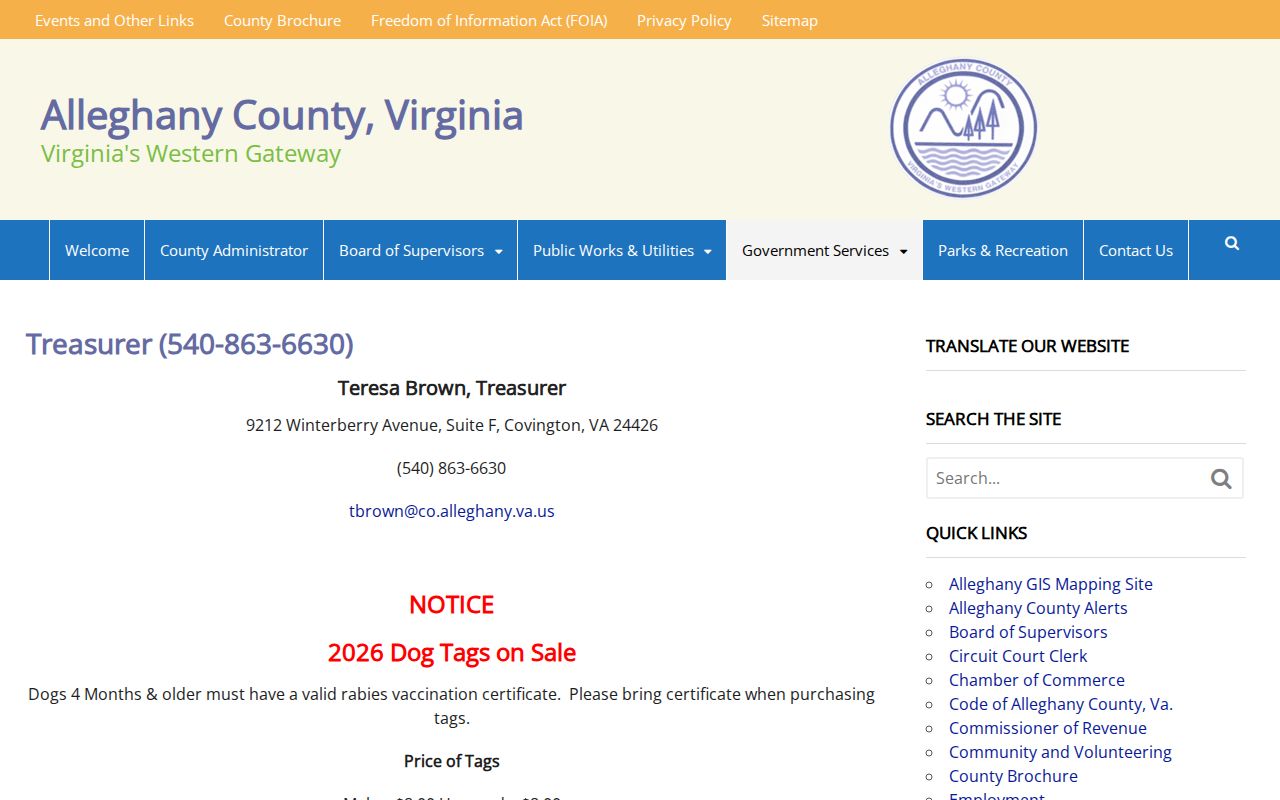
Treasurer Teresa S. Brown occupies Suite F of the same complex, at 540-863-6630. It bills and collects. It also keeps payment and auction information. Keeping the roles straight prevents a familiar dead end. An assessment dispute goes to the Commissioner, while a missing ticket or payment entry goes to the Treasurer. A bill may be addressed to an escrow company, yet it still concerns the owner's parcel.
The Commissioner's page explains the assessment role. Review its official contact and program information before requesting an adjustment or relief review.
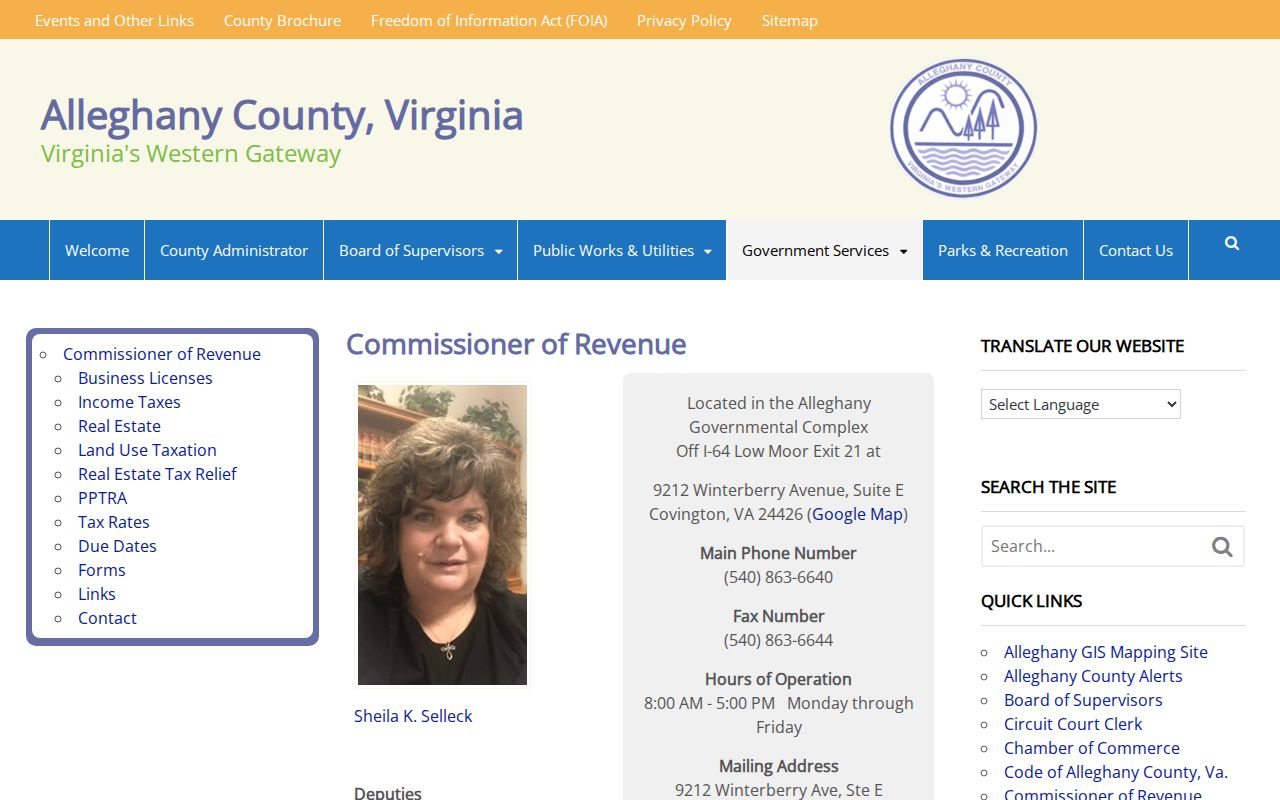
Call ahead when your question involves a specific account, and rely on the listed office hours for current service details.
Alleghany's 2025 Reassessment and Six-Year Cycle
Alleghany's county brochure places the general real-estate reassessment at tax year 2025 on a six-year cycle. That schedule promises little. Parcels can shift between general cycles through construction, boundary changes, land-use classification, and correction work. A card does not update at deed recording. Read the year printed on the value. Only then compare it with an earlier roll or a recent sale.
No countywide value-trend percentage is published, nor a parcel-by-parcel appeal calendar or current appeal form. Ask the Commissioner for present review steps, deadlines, evidence rules, and any board stage, since the reassessment cycle itself sets no deadline. Never borrow a deadline from another Virginia locality.
State assessment statutes supply the framework. The local office applies it parcel by parcel. Consult Virginia's real-property tax chapter for the statutory language, and confirm current local instructions with the Commissioner.
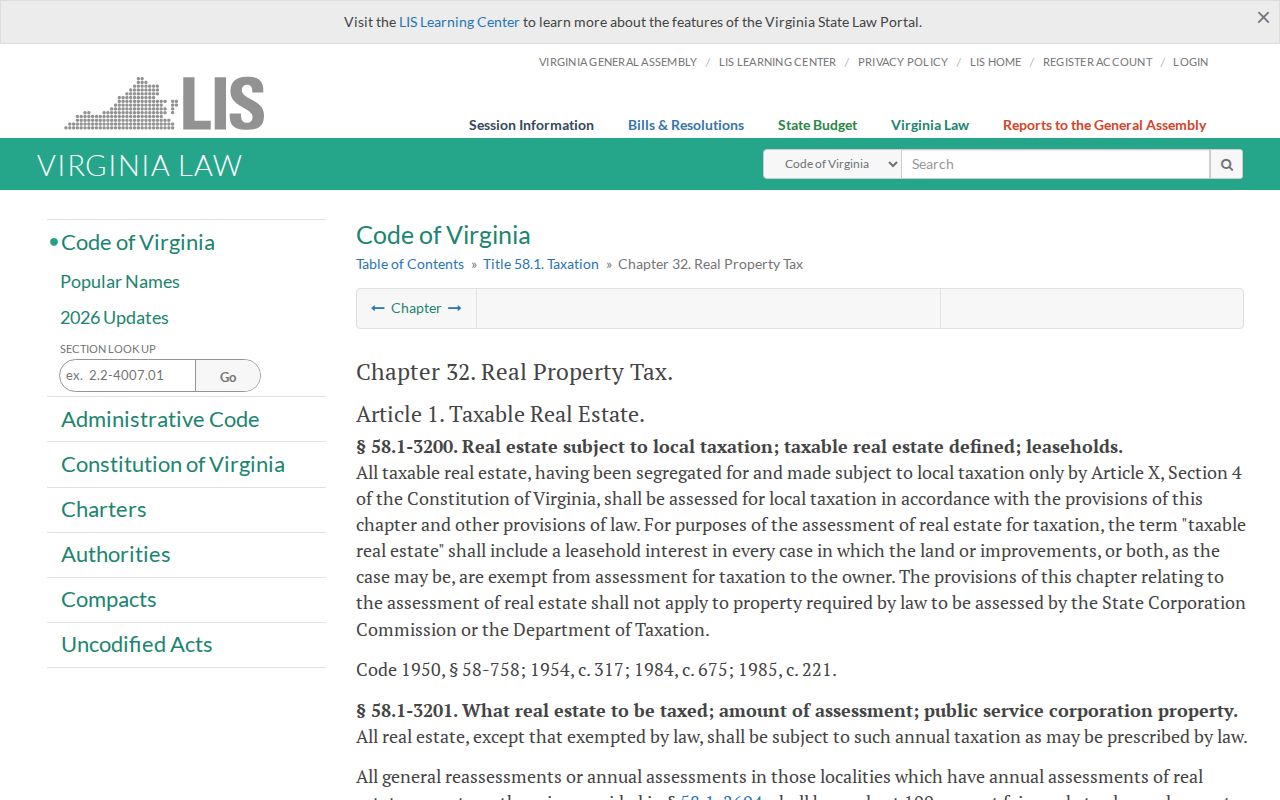
Keep the assessment year with your evidence. Attach any notice date too, so the office can identify the correct roll.
Land-Use Assessment Is a Deferral in Alleghany County
Alleghany County runs a land-use program. The Treasurer describes its tax effect as a deferral rather than a total abatement. The difference matters. A lower taxable figure may reflect program treatment instead of a permanent escape from tax responsibility. Ask the Commissioner whether the parcel is enrolled, what qualifications apply now, and what event could trigger deferred tax.
The county publishes no complete local application, acreage threshold, renewal schedule, or penalty formula. Rural land with open fields does not qualify automatically. Confirm the classification and required documents with the office. A program flag on an assessment card says nothing about the amount due either. The bill lives in the Treasurer's account.
Senior and disability relief is another Commissioner function. Verify eligibility and application rules there. Public assessment fields never expose protected tax-return material. A public-records request cannot override confidentiality limits either.
Find an Alleghany County Bill and Confirm Payment
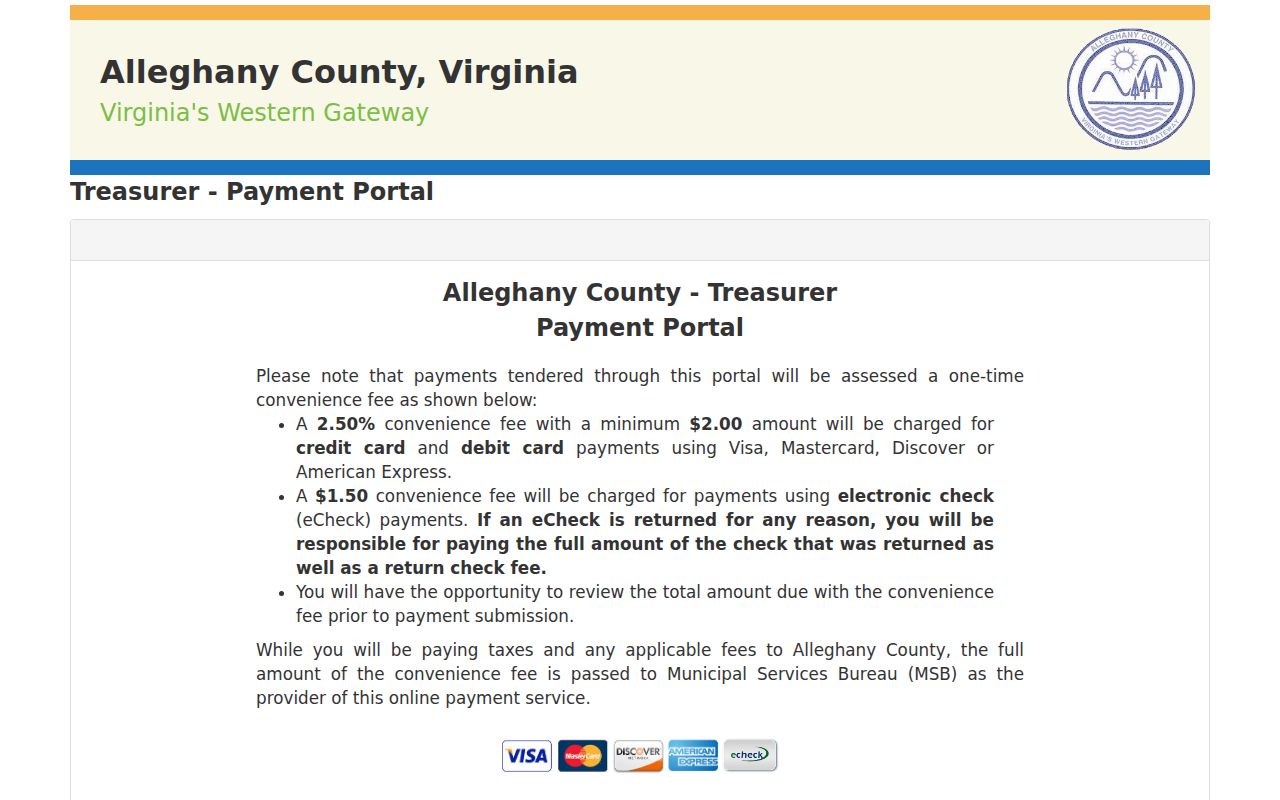
Start with the 14-digit real-estate Property ID. Pull it from the assessment record or an existing tax ticket. Compare the parcel before paying anything. The Treasurer's online portal runs through MSB, with phone, mail, drop box, and counter options also listed by the office. Card or online payments may carry a convenience fee. Check the final amount before you confirm.
- Copy the entire Property ID from a trusted parcel record.
- Open the Treasurer account and confirm that the situs and billing year match.
- Review the balance, payment status and any fee displayed by the current portal.
- Save the confirmation and contact the Treasurer if an escrow or mailed payment is unclear.
- Use the Commissioner record separately for assessed value or relief questions.
- Assessed value
- The value placed on the real-estate roll for taxation.
- Market value
- An estimate at an assessment date; it may differ from one sale's consideration.
- Land-use deferral
- A program treatment that can defer tax rather than erase it.
- Tax account
- The Treasurer's bill and payment record, separate from the deed index.
Alleghany County Tax Notices and the 14-Digit Identifier
The Treasurer's 2025 notice reported that real-estate and refuse bills had been mailed. The due date was December 5, 2025. It warned that not receiving a ticket does not remove penalty or interest under Va. Code §58.1-3926. That date has passed. Check the current county notice for the present billing year. Do not treat the old notice as payment guidance.
Online, phone, mail, drop-box, and counter payments are all accepted by the office. The notice listed a $35 fee for a returned check. A returned e-check carries a $50 fee. Other convenience fees may apply to electronic payment. For payments by phone, the Treasurer lists 1-833-303-6687. Confirm the account and accepted payment method through the official portal.
The county Treasurer's page carries current notices along with its past auction announcements. Check the official Treasurer page before relying on an older date or sale notice.
The MSB payment portal is the online account route the Treasurer names for Alleghany County tax bills. Open the Alleghany County payment portal to review its current lookup and payment fields.
The MSB portal handles payment, while the county Treasurer's page supplies office notices and contact details for the tax roll.
Check Town Tax-Ticket Jurisdiction Before Comparing Bills
Clifton Forge and Iron Gate residents get their real-estate tax tickets from their towns. The county does not bill them. That split comes from the Treasurer's page. It affects billing only. Deeds and probate land records stay with the county custodians. The county and state ownership chain stays there too. Covington differs again. As an independent city, it keeps its own real-estate tax roll outside Alleghany County's system. Before comparing amounts, determine which jurisdiction actually taxes the parcel.
A mailing city can reach past a municipal boundary. Start with the county GIS map for a visual check. Then ask the town or county office which one bills the property. For a county parcel, the 14-digit Property ID links to the Treasurer account. A town-issued bill carries its own identifier instead. A postal label alone never settles where payment goes. The local property-record pages explain their town-specific distinctions: Clifton Forge and Iron Gate.
Delinquency and Alleghany Real-Estate Auction Notices
The Treasurer's public page has listed real-estate auctions for 2021, 2022 and 2025. No next sale date is currently displayed. Those listings are history. They are not a current delinquent-parcel list. Ask the Treasurer for the latest notice, and include the parcel or PID. Also ask about sale terms, deposit, minimum bid and payment instructions. If your question concerns title after a sale, take it to the Clerk instead. Ask about a recorded purchaser's deed or court filing.
The county publishes no downloadable lien list, redemption timeline, publication outlet or attorney-fee rule online. Avoid relying on an old notice or an outside sale advertisement. Mortgage escrow does not erase the landowner's duty to confirm a bill was paid. A payment demand with urgent wire instructions deserves a call to the Treasurer. Use the official number, 540-863-6630. Delinquency often spans two records: the Treasurer's account and a recorded instrument. Each has a different custodian, so confirm each step with the office that holds it.
Ask the Commissioner About an Assessment Review
The Commissioner of the Revenue handles Alleghany County assessments. General reassessment runs on a six-year cycle. The county publishes no current appeal board name, filing deadline, application form or evidence checklist. Request those details from the Commissioner before filing a challenge. Ask whether the first step is an informal review. Identify which parcel and roll year to cite. Ask what evidence the office accepts and how a later appeal proceeds. Never borrow a deadline from another county.
For a value question, organize the parcel ID, legal description, assessment year and any relevant recorded sale or property characteristic. Keep land and improvement values separate. Identify any land-use or relief program that applies. A recorded sale can help. Family terms, partial interests or other non-market conditions may skew the price, so explain the context rather than treating it as an automatic correction.
Confirm the local process. No verified current deadline or appeal form was located in the reviewed material. Call the Commissioner at 540-863-6640 for the active filing steps and dates for the roll in question.
State law sets the framework for real-property assessment. The local office must confirm the current parcel-specific route. The county's general reassessment date does not by itself establish an appeal deadline.